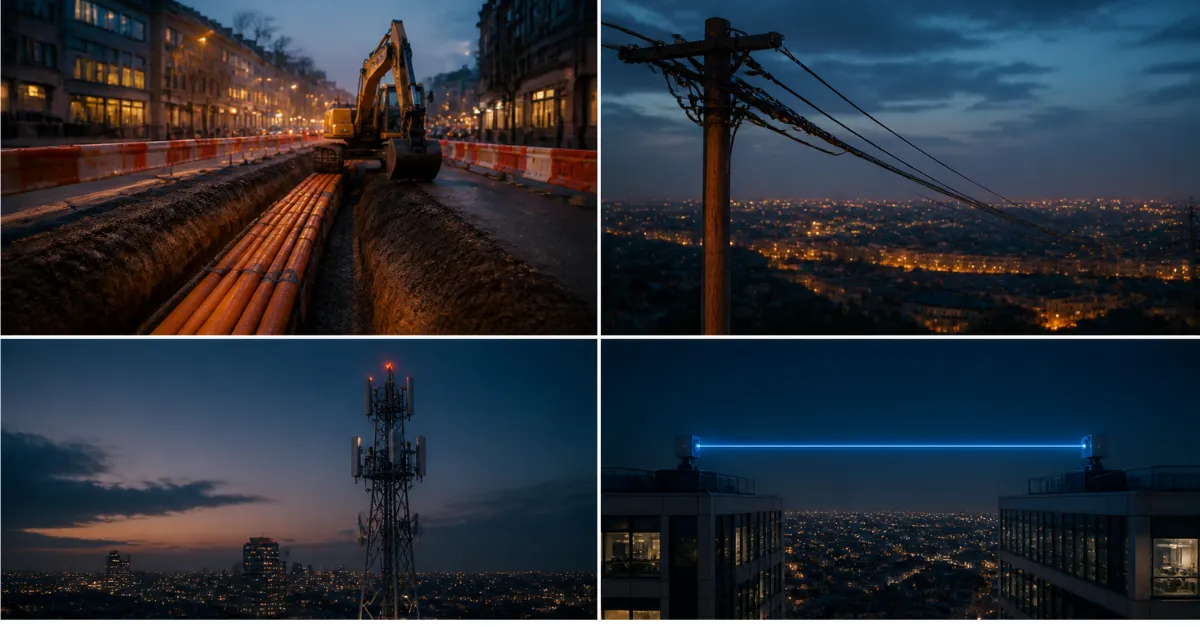
Airports, ports, power grids, hospitals and emergency services all have one thing in common. When something goes wrong, the first thing they need is to keep talking. Most of that communication travels over fibre, which can be cut, or over radio, which can be jammed, congested or detected. The word everyone in this field uses is resilience. In this article we look at what that should mean in practice, and where free-space optics fits.
Why resilience is now a legal question, not only a technical one
Resilience used to be a matter of good engineering. In the EU it is now also a matter of law. The Critical Entities Resilience Directive (Directive (EU) 2022/2557), adopted on 14 December 2022, replaced the narrower 2008 rules on critical infrastructure. It covers eleven sectors: energy, transport, banking, financial market infrastructure, health, drinking water, wastewater, digital infrastructure, public administration, space and food.
Member States had until 17 July 2026 to identify the organisations that count as critical entities. Once notified, those entities have ten months to show they meet the directive's obligations, including measures to keep essential services running through disruption. Its sister directive, NIS2, covers the cyber side. Together they shift the question from "is this asset protected?" to "does this service keep working when something fails?"
What recent incidents tell us
Three recent events show how many different ways a connection can fail.
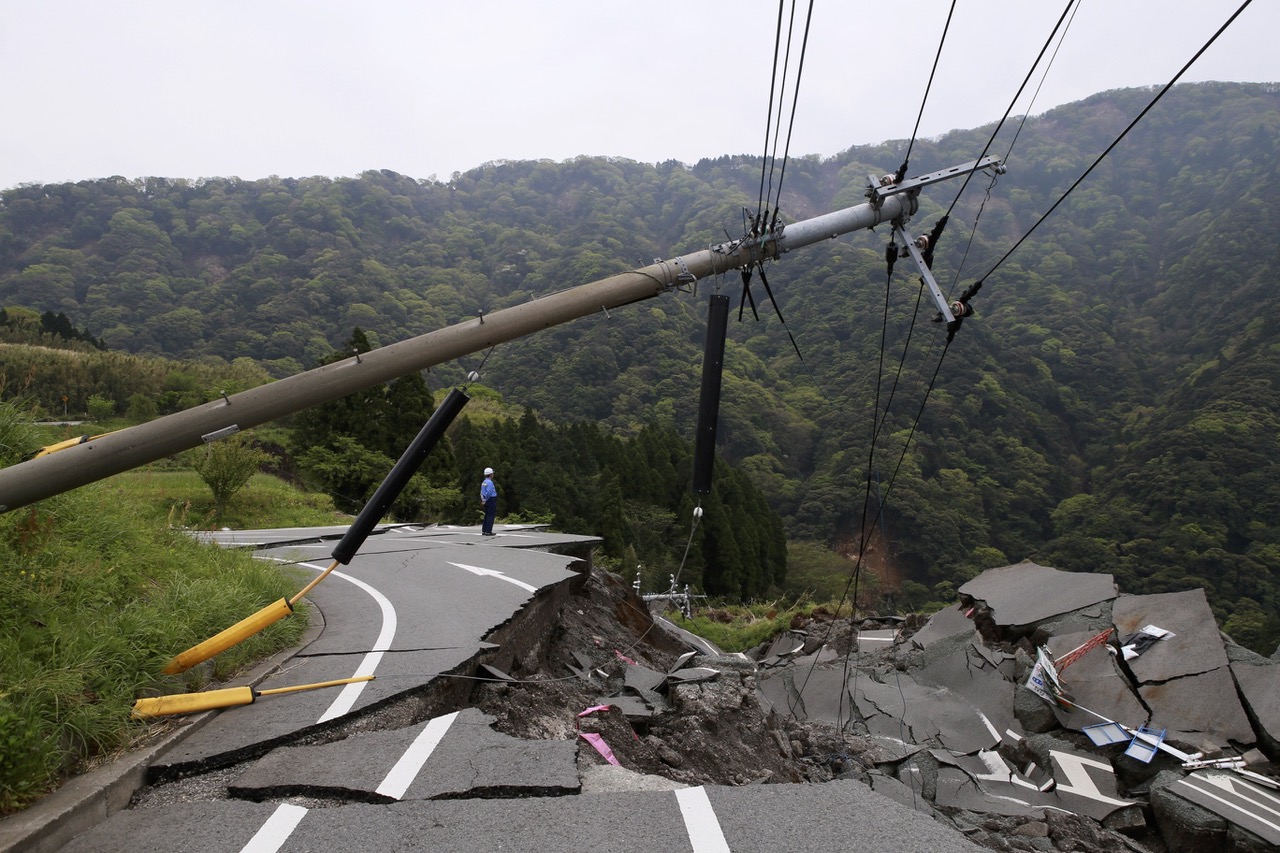
• Physical damage. On 18 November 2024 the C-Lion1 data cable between Finland and Germany was cut. On 25 December 2024 the Estlink 2 power cable and four data cables between Finland and Estonia were damaged (FIIA, 2025).
• A threat at a critical site. On the night of 4 to 5 August 2026, a drone carrying explosives was found at Leipzig/Halle Airport, one of Europe's largest cargo hubs, and flights were diverted (Euronews).
• A simple network failure. On 20 May 2025 a network update at a Spanish operator left the 112 emergency number unreachable in several regions for hours, and regions had to publish alternative numbers (Catalan News).
Sabotage, physical threat and ordinary technical failure. The causes are very different, but the lesson is the same: a site that depends on one path is only as strong as that path.
What a second path really means
A backup link only helps if it fails for different reasons than the main one. Two fibres in the same duct are cut by the same excavator. A radio backup shares the airwaves with everyone else and can be jammed or overloaded at exactly the moment it is needed. Real route diversity means a separate physical route and, ideally, a different technology with different weak points.
How free-space optics adds an independent path
Free-space optics carries data through the air on a narrow beam of infrared light between two terminals, with capacity close to fibre. Because it does not travel through the ground, it is not exposed to the same digging, anchors or duct failures as a cable. Because it does not use radio spectrum, it does not compete with crowded frequencies and typically needs no spectrum licence.
The beam is also very narrow. That makes it very hard to detect and very hard to jam, because an adversary has to be inside or directly next to the beam path to interfere with it. We explain this in more depth in why free-space optics is hard to intercept. Terminals mount on rooftops or masts, so a link can be added in days rather than the months a new trench can take.
Where the limits are
Free-space optics is not a replacement for fibre, and it is not right for every situation. It needs a clear line of sight between the two terminals. Dense fog is its main weather limitation, so link distance and margin are planned around local conditions. And because the beam is narrow, the terminals need automatic pointing and tracking to stay on target as buildings and masts move. That is why we see it working alongside fibre, not instead of it.
Our focus: defence first, critical infrastructure next
Our first focus is defence. Critical infrastructure shares the same core needs: capacity, speed of deployment and links that cannot easily be disrupted. For a sector-by-sector view, read critical infrastructure and free-space optics. If you are responsible for communications at an airport, port, utility or emergency service, we would like to hear how you think about backup links today. Get in touch.