Short answer: no. Free-space optical (FSO) communication will not replace fiber. Fiber stays the backbone of every serious network. FSO extends it, carrying fiber-grade capacity through the air where cable is too slow, too costly or impossible to lay, and adding an independent second path when a cable is cut.
Every few years a new wireless technology is billed as the end of the cable. It never happens, and for good reason. Nothing we have built moves more data, over longer distances, with more stability than a strand of glass.
So the useful question for network planners is not whether to replace fiber. It is what to do in the places fiber cannot reach in time, or cannot reach at all. That is where optical wireless comes in. At Aircision, we build free-space optical links that start and end in fiber: they take the light out of the glass, send it through the air and put it back in. New to the technology? Start with our explainer, What is Free Space Optics?
Fiber is the backbone, and that is not changing
Europe is still building fiber at pace. The European Commission's latest connectivity coverage study found that fiber to the premises (FTTP) reached 74.1% of EU households by mid-2025, making it the most widespread fixed broadband technology in Europe for the first time. The EU's Digital Decade target goes further: gigabit coverage for every household by 2030.
No wireless system matches a fiber cable for raw capacity over hundreds of kilometers, and none needs to. The backbone is in good hands. The pressure sits at the edges of the network, in the last few kilometers where the next cable is still a plan on paper.
Where fiber gets hard
Fiber is fast to use and slow to build. Every new route means digging, permits and coordination. EU lawmakers say so directly: the Gigabit Infrastructure Act notes that a significant share of the investment in high-capacity networks goes into civil engineering works, and that inefficiencies in rollout create high financial barriers, particularly in rural areas.
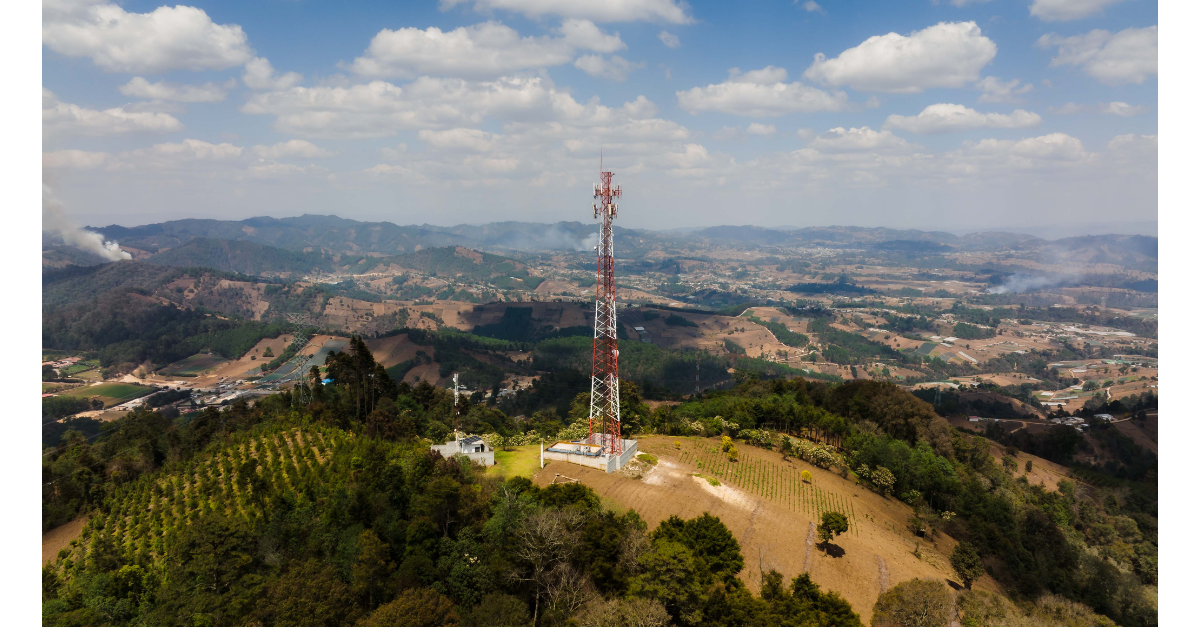
Some routes arehard for reasons that have little to do with distance. A motorway, river orrailway line between two buildings. A historic city center where the streetscannot be opened. A rural mast whose 5G traffic has outgrown its radiobackhaul. A site that needs capacity for six weeks, not thirty years.
The gap is global too. The International Telecommunication Union estimates that 2.2 billion people were still offline in 2025, and that 85% of people inurban areas use the internet compared with 58% in rural areas. Trenches alone will close that gap slowly.
What free-space optics adds to a fiber network
Free-space optics sends data on a narrow beam of infrared light between two terminals with a clear line of sight. Because it uses light, it speaks the same language as fiber. On the Eindhoven testbed, the terminals are coupled to fiber on both ends. As the TU/e researchers describe in their OFC 2025 paper, this allows the link to integrate with deployed fiber networks and to use standard fiber components, including coherent transceivers.
That designchoice is the whole point. An optical wireless link is not a separate networkto manage. It behaves like a fiber segment without the trench.
Fiber-class capacity
In October 2024, TU/e researchers transmitted 5.7 terabits per second over the 4.6 km link between the TU/e campus and High Tech Campus Eindhoven, using Aircision's optical antennas. According to TU/e, it is the fastest wireless data transmission ever demonstrated over that distance in an urban setting. Read how the Reid Photon Loop testbed was built.
"Infrared wireless communication combines the high dataspeeds known from optical fibers with the flexibility of wireless communicationsystems."
Vincent van Vliet, PhD researcher, Eindhoven University of Technology (TU/e)
Hours, not months
An optical link needs a rooftop or a mast at each end, not a trench between them. There is no spectrum license to apply for, because the link runs on light rather than radio. Our Blackbird system is plug-and-play with existing infrastructure, carrying up to 10 Gbps over 1 to6 km, and our links can be deployed in the field in under six hours.
Hard to detect, hard to jam
A narrow infrared beam leaves no radio signature to intercept or jam. That makes optical wireless a natural fit for defense and critical networks, and it is why Aircision joined the Dutch Defence optical alliance in 2024.
Four ways optical wireless and fiber work together
- Closing the backhaul gap
A new 5G or small-cell site is often ready long before the fiber reaches it. An FSO link can carry its traffic from a nearby fiber point today, and stay on as a second path once the cable arrives.
- Crossing what cable cannot
Rivers, motorways, rail lines and protected city centers turn a short hop into a long, expensive detour for cable. A line-of-sight optical link crosses them in a single step: fiber in, fiber out.
- A second path for resilience
Fiber cutshappen, from construction work to sabotage. An optical link on a differentphysical route gives critical sites a backup that does not share the sametrench. It can also be installed quickly to restore service after a disaster.
- Capacity where and when it is needed
Events,construction sites, ports and field operations need high capacity for a limitedtime. Laying permanent fiber for a temporary need rarely makes sense. Anoptical link can be set up, used and moved.
Fiber and FSO: different roles in one network
Why optical wireless will not replace fiber
It is worth being clear about the limits, because they are exactly why the two technologies fit together. FSO needs a clear line of sight between terminals. It covers kilometers per hop, not the hundreds of kilometers a fiber route can span. And the atmosphere matters: dense fog and heavy drizzle can weaken an infrared beam enough to interrupt a link, one of the effects TU/e researchers are studying on the Eindhoven testbed.
Fiber is buried, sheltered and largely indifferent to the weather. That is why it remains the backbone. Optical wireless adds flexibility and speed of deployment on top, and radio can add a weather-tolerant fallback. In 2025 we tested a hybrid free-space optics and microwave link over more than 5 km in Eindhoven as part of the Future Network Services 6G program. The future network is layered, not either-or.
Planning a link where fiber is slow, costly or out of reach? Talk to our engineers.