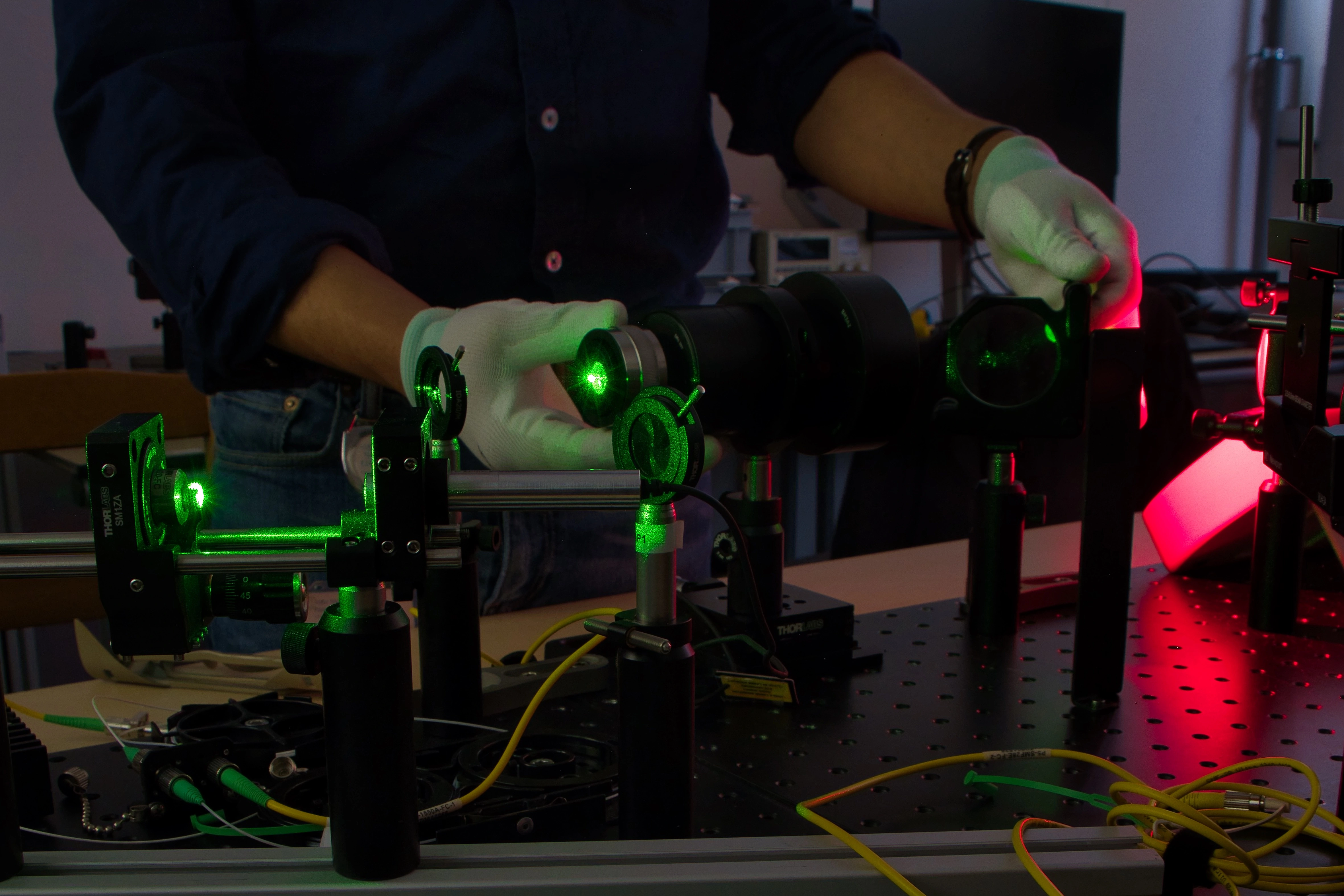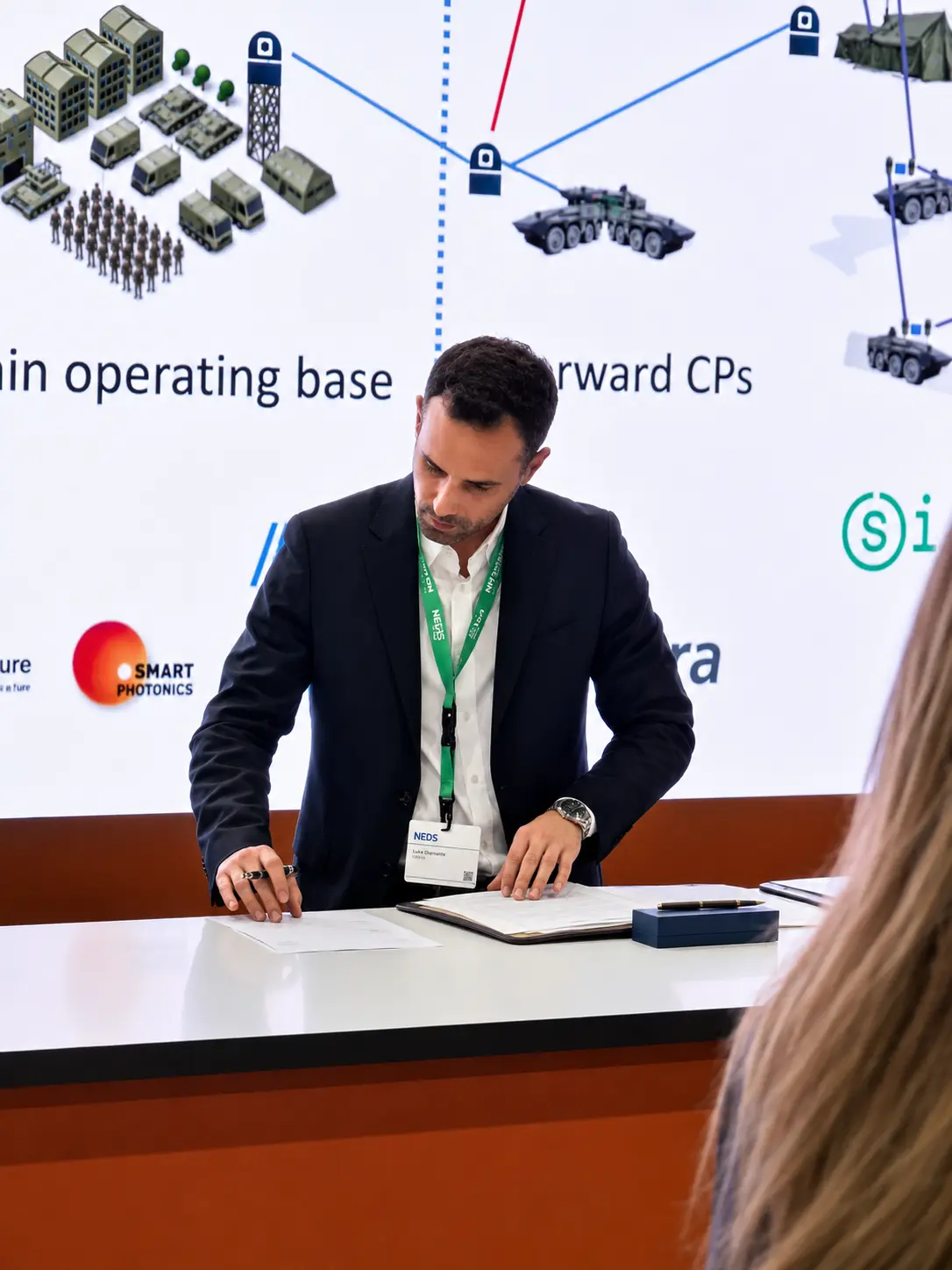
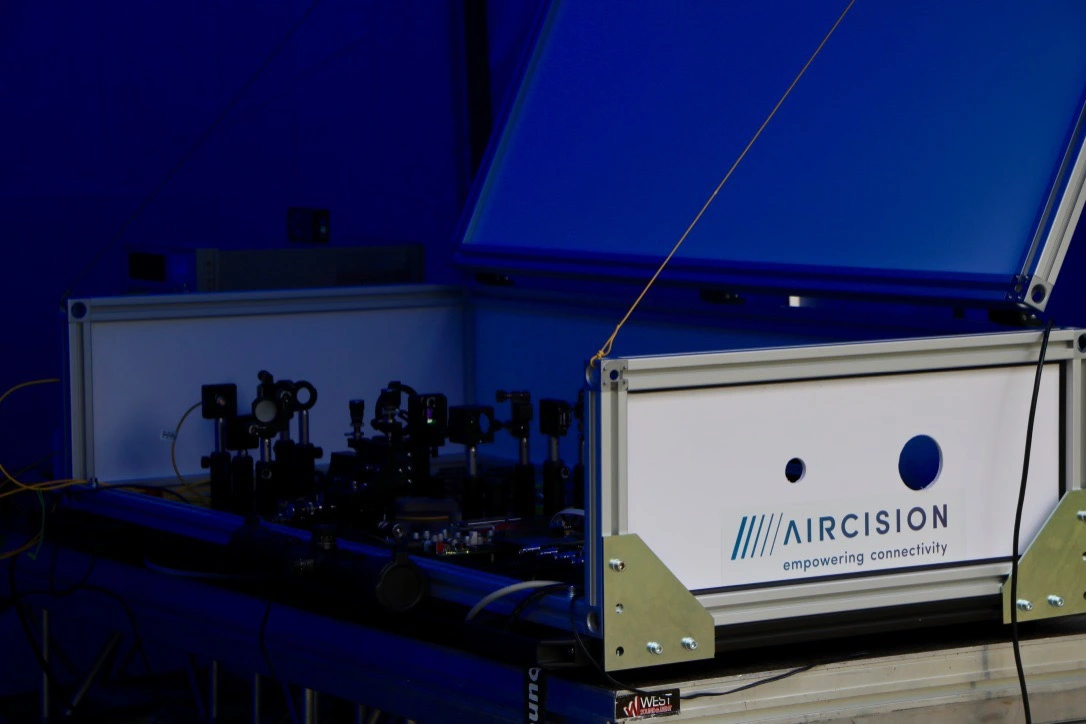
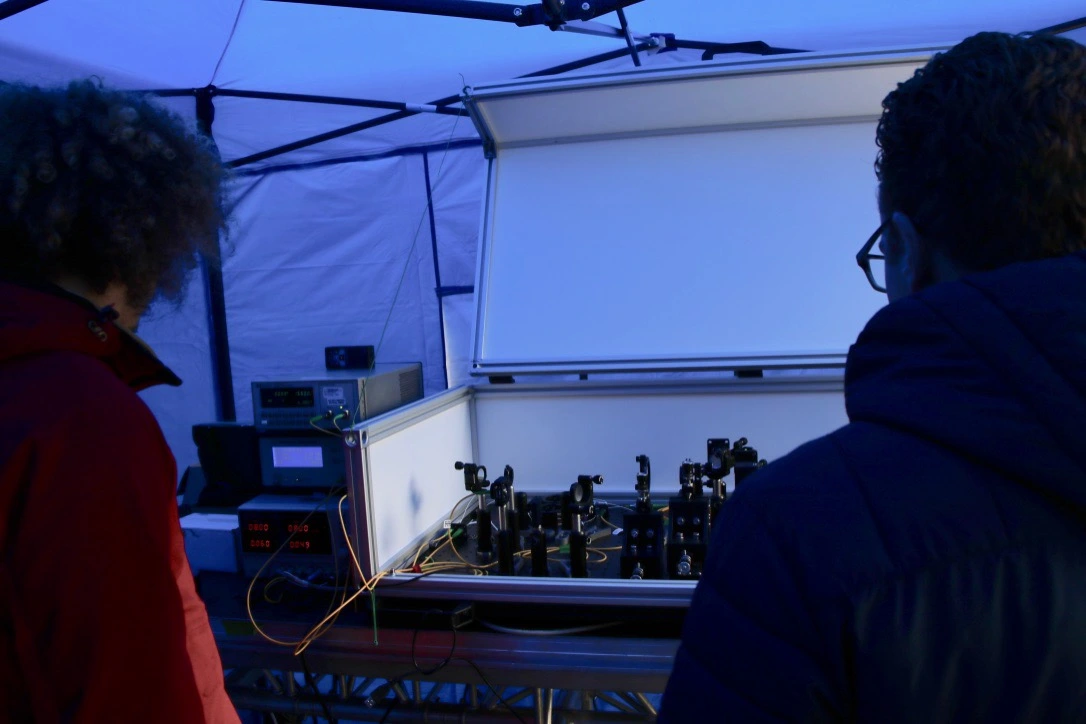
In September 2020, Aircision and TNO (the Netherlands Organisation for Applied Scientific Research) signed a consortium agreement to explore a new generation of free-space optics (FSO) for 5G networks. The project, named BackCAT (Backhaul Communication Active Terminal), combined TNO's high-throughput FSO expertise with Aircision's structured beam-forming technology, itself based on laser beam research originally developed at CERN.
Conventional FSO relies on lasers with a Gaussian beam profile, which are highly sensitive to atmospheric disturbance and distance. TNO and Aircision set out to test a structured beam with different physical properties, aiming to prove that this approach could unlock performance levels not previously possible for terrestrial optical wireless links.
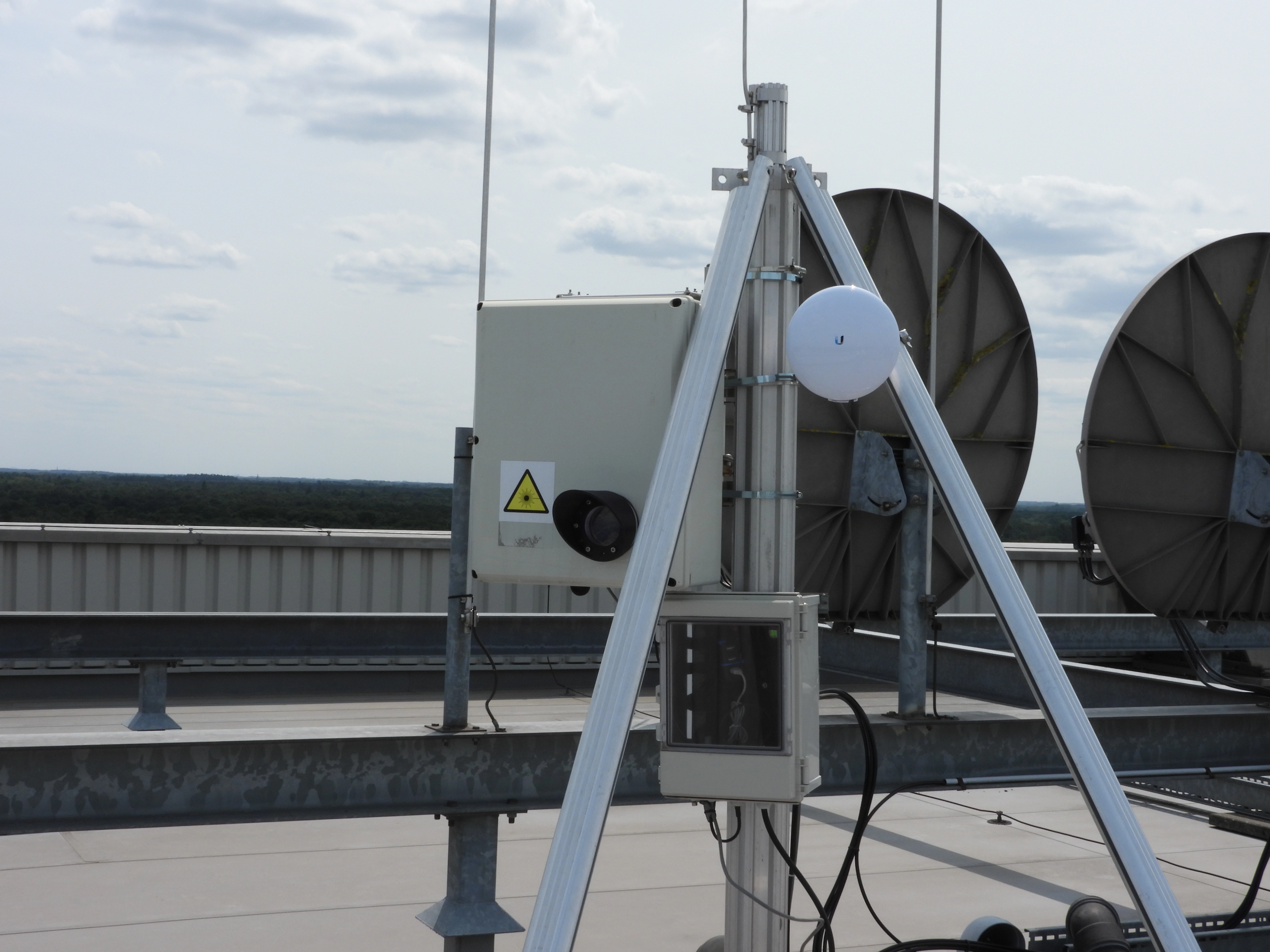
The ambition was concrete: a 10 Gbps FSO link across 2.5 km, between TNO's Optical Communication Lab in The Hague and the Luchtwachttoren in Scheveningen. If successful, the partners believed the technology could become a critical part of 5G backhaul infrastructure, particularly for rural and remote areas where fibre is too costly or impractical to lay.
This early collaboration marked the starting point for years of joint field testing between Aircision and TNO, eventually leading to verified multi-gigabit and, later, multi-terabit links.
FAQ
What was the BackCAT project?
BackCAT was the2020 Aircision-TNO project that tested CERN-derived structured laser beams tomake free-space optics reliable enough for 5G backhaul.
Quick Facts
- Partners: Aircision, TNO
- Project name: BackCAT (BackhaulCommunication Active Terminal)
- Target: 10 Gbps over 2.5 km
- Funding: Holland High Tech PPPGrant, Top Sector HTSM
Original source
Sourced from: TNO Newsroom, 28 September 2020. https://www.tno.nl/en/newsroom/2020/09/tno-aircision-signed-contract-explore/
Also covered by
Bits&Chips,"TNO and Aircision link for FSO 5G exploration" (2020). https://bits-chips.com/article/tno-and-aircision-link-for-fso-5g-exploration/